MIT Apps for Action
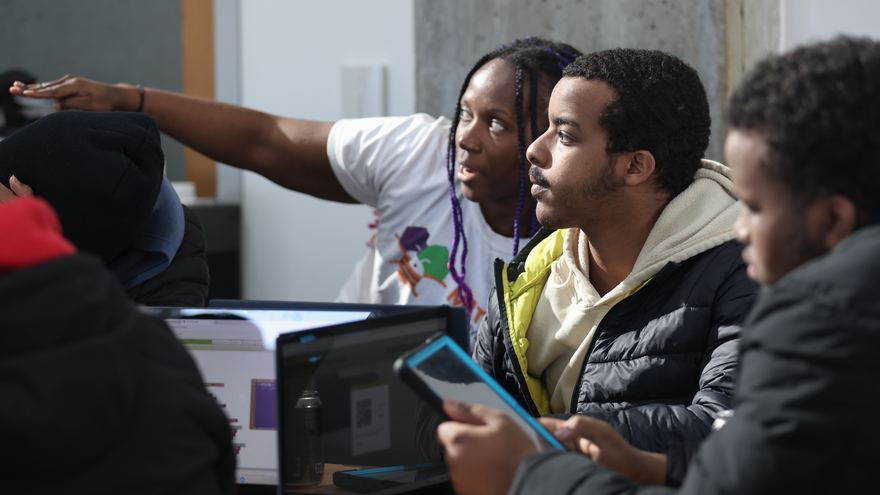
MIT Apps for Action is a student STEM certificate program that combines mobile app design, AI fluency, design thinking, and project management. Students finish with a working app they built themselves, and with the skills to enter regional Innovation Challenges, coding competitions, or our annual Global Appathon.
Our goal is that your students stop being passive consumers of digital content and become active creators of their own solutions. Whether they build an app to address a local community or health issue, celebrate their community's culture, or protect the environment, they are practicing what we call Computational Action. They are not just learning to use technology; they are using technology to make a difference.
Three shapes, depending on the time you have
Every model guides students through a design process using MIT App Inventor as part of hands-on AI literacy instruction, including reflection on the benefits and harms of AI. The longer models add the skills that turn a working app into a finished project students can stand up and present.
2-day bootcamp
Over 12 hours of instruction
- Create apps using App Inventor and AI
- Discuss what responsible and ethical AI means to them
1-week workshop
Over 30 hours of instruction
- Create apps using App Inventor and AI
- The basics of design thinking and responsible design
- Discuss what responsible and ethical AI means to them
2-week immersion
Approximately 60 hours of instruction
- Create apps using App Inventor and AI
- Responsible design
- Presentation skills
- Leadership and project management
- Discuss what responsible and ethical AI means to them
- 20–30 students per cohort
- In-person instruction
- Certificates on completion
- No prior coding experience needed
What students walk away with
Besides the apps on their phones, and a certificate on completion:
- confidence — they have shipped something that works, in front of other people, which is a different kind of knowledge than a passing grade.
- community-building skills — they address a problem in their own community, so the app has someone real to serve.
- empowerment — the tools they learn to master are the tools that will shape their world.
- computational thinking — decomposition, pattern-finding, and debugging, learned on a problem they chose.
- problem-solving skills — they practice the whole arc, from defining a real problem to presenting a working solution.
- inspiration — to take what they built further, into a regional Innovation Challenge, a coding competition, or the Global Appathon.
The longer programs add responsible design: students weigh what their app asks of the people who use it, and what AI gives and takes in the process.
Talk to us about bringing it to your school
MIT App Inventor runs the program. You bring the students.
Tell us roughly how many students, what dates you have in mind, and where you are.
Marisol Diaz, Program Manager, MIT App Inventor · marisold@mit.edu